How to Read Backpacking Stove Flame Colors: Essential Guide to What Each Color Means, Safety & Fixes
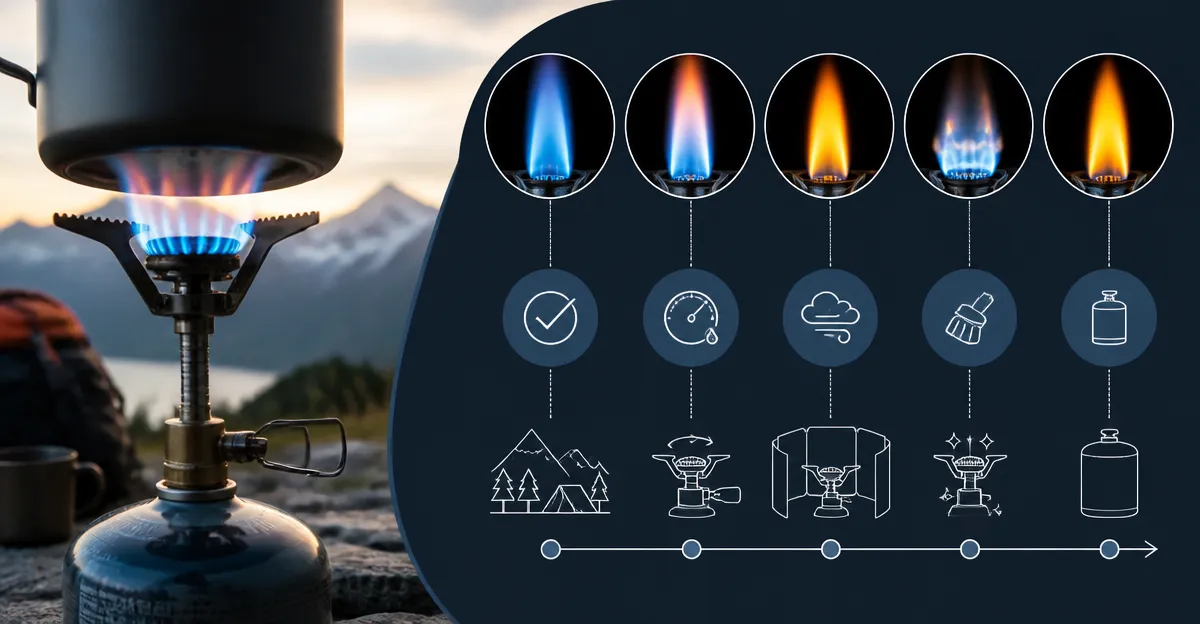
Backpackers rely on compact stoves to prepare meals in remote environments. The color of a stove flame is a direct indicator of combustion efficiency, fuel quality, and safety. Understanding what each hue signifies enables one to avoid hazardous situations and optimize cooking performance. This guide explains the meaning of common flame colors, provides step‑by‑step diagnostics, and recommends reliable tools to keep any stove operating at its best.
What You'll Need
- A reliable backpacking stove (e.g., Jetboil Genesis Basecamp Stove or Gas One Portable Stove)
- Appropriate fuel canisters (propane for Jetboil, butane for Gas One)
- Adjustable wrench or stove-specific regulator
- Cleaning brush and soft cloth
- Protective gloves
Step 1: Observe the Flame
Before any adjustment, light the stove in a well‑ventilated area and watch the flame for at least thirty seconds. Record the dominant hue—blue, yellow, orange, or red—and note any flickering or sputtering. A stable blue flame indicates complete combustion, while yellow or orange tones suggest excess carbon particles or insufficient oxygen. Use this observation as the baseline for subsequent troubleshooting.
Step 2: Identify Normal Flame Colors
Most modern backpacking stoves produce a primarily blue flame with a faint, almost invisible, tip. This blue region represents the hottest part of the flame where fuel mixes evenly with air. A small, steady yellow tip may appear at the top of a high‑output burner; this is normal and does not affect safety. Understanding these nuances prevents unnecessary adjustments that could degrade performance.
Step 3: Diagnose Unusual Colors
If the flame appears predominantly yellow, orange, or red, consider the following common causes:
- Fuel Impurities: Low‑quality or old fuel can contain contaminants that produce carbon soot, resulting in a yellow or orange hue.
- Insufficient Air Supply: A clogged air vent or mis‑aligned regulator limits oxygen, causing incomplete combustion.
- Improper Fuel‑to‑Air Ratio: Over‑pressurised canisters or a partially closed valve can create a rich mixture, leading to a reddish flame.
- Dirty Burner: Residue from previous use blocks flow paths, altering flame color.
Address each factor methodically to restore a clean blue flame.
Step 4: Adjust Fuel and Air Mixture
Most dual‑burner systems, such as the Jetboil Genesis Basecamp Stove, feature an adjustable regulator that fine‑tunes the fuel‑to‑air ratio. Turn the regulator clockwise to increase airflow, which typically shifts a yellow flame toward blue. If the flame becomes too weak, turn the regulator counter‑clockwise in small increments. The Jetboil system delivers 10,000 BTU per burner and maintains performance down to 20 °F (‑6 °C), making precise adjustments valuable in cold environments.
For the Gas One Portable Stove, the built‑in piezo igniter does not include a separate air‑mix control; instead, ensure the butane canister is fully seated and the fuel valve is fully open. The stove provides 7,650 BTU and is CSA‑approved for safety, but it relies on a clean burner head to achieve a blue flame.
Step 5: Clean and Maintain the Burner
Regular maintenance prevents color shifts caused by residue buildup. Disassemble the burner according to the manufacturer’s manual, then use a soft brush to remove carbon deposits from the fuel jet and air vents. Wipe the exterior with a lint‑free cloth to avoid introducing foreign particles. Re‑assemble the stove and perform a test fire; a clean blue flame should be evident within seconds.
Both recommended stoves include carry cases that protect the burners during transport, reducing the likelihood of dirt accumulation. The Jetboil’s fold‑in design nests the burners inside the pot, while the Gas One comes with a sturdy case that doubles as a storage solution.
Tips & Pro Tips
- Always store fuel canisters upright and away from direct sunlight to preserve fuel integrity.
- When cooking at high altitude, expect a slightly bluer flame due to lower air density; adjust the regulator accordingly.
- Carry a spare fuel canister on multi‑day trips; running out of fuel mid‑adjustment can leave you with a dangerous yellow flame.
- Use a windscreen—both stoves include compatible windshields—to stabilize the flame and prevent erratic color changes caused by gusts.
Troubleshooting
| Problem | Possible Cause | Solution |
|---|---|---|
| Flame stays yellow after adjustment | Contaminated fuel | Replace the canister with a fresh, high‑grade fuel. |
| Flame sputters and changes color | Clogged air vent | Clean the vent with a thin wire or brush. |
| Flame goes out when wind blows | Insufficient wind protection | Deploy the windscreen and position the stove in a sheltered spot. |
Conclusion
Reading backpacking stove flame colors is a straightforward skill that enhances safety and cooking efficiency. By observing the flame, understanding normal versus abnormal hues, adjusting the fuel‑air mixture, and maintaining a clean burner, one can prevent hazardous conditions and enjoy reliable heat on the trail. The recommended Jetboil Genesis Basecamp Stove and Gas One Portable Stove provide robust platforms for applying these techniques, whether traveling solo or in a group.
Products Mentioned in This Guide
Frequently Asked Questions
What does a blue flame indicate on a backpacking stove?
A blue flame shows complete combustion and optimal fuel efficiency.
Why might a stove produce a yellow or orange flame?
Yellow or orange flames signal incomplete combustion, often caused by dirty burners or low fuel pressure.
Can a red flame be dangerous?
Yes, a red flame usually means excess carbon buildup or a fuel mixture issue and should be addressed immediately.
How often should I clean my stove to maintain proper flame color?
Clean the burner and regulator after each trip or whenever you notice color changes in the flame.
Does using the wrong fuel type affect flame color?
Using propane in a butane‑only stove (or vice‑versa) can produce abnormal flame colors and reduce performance.